sponsored links


Showing posts with label Environtment. Show all posts

Thursday, September 3, 2009

Finally, a sea level rise NOT blamed on global warming

From NOAA News: NOAA Report Explains Sea Level Anomaly this Summer along the U.S. Atlantic Coast

NOAA scientists install current measuring systems on a U.S. Coast Guard Navigation Buoy.NOAA scientists install current measuring systems on a U.S. Coast Guard Navigation Buoy. Credit: NOAA

Persistent winds and a weakened current in the Mid-Atlantic contributed to higher than normal sea levels along the Eastern Seaboard in June and July, according to a new NOAA technical report.


After observing water levels six inches to two feet higher than originally predicted, NOAA scientists began analyzing data from select tide stations and buoys from Maine to Florida and found that a weakening of the Florida Current Transport—an oceanic current that feeds into the Gulf Stream—in addition to steady and persistent Northeast winds, contributed to this anomaly.


“The ocean is dynamic and it’s not uncommon to have anomalies,” said Mike Szabados, director of NOAA’s Center for Operational Oceanographic Products and Services. “What made this event unique was its breadth, intensity and duration.”


The highest atypical sea levels occurred closer to where the anomaly formed in the Mid-Atlantic, where cities like Baltimore, Md., at times experienced extreme high tides as much as two feet higher than normal. Data from NOAA’s National Water Level Observation Network tide stations, Atlantic Oceanographic and Meteorological Laboratory, and National Data Buoy Center, are published in the report.

Local flooding at Carolina Beach, NC, due to this summer's elevated sea level anomaly on the East Coast.Local flooding at Carolina Beach, NC, due to this summer's elevated sea level anomaly on the East Coast. Credit: Island Gazette Newspaper

Impacts of the event were amplified by the occurrence of a perigean-spring tide, the natural timing of the season and month when the moon is closest to the Earth and its gravitational pull heightens the elevation of the water. The combined effects of this tide with the sea level anomaly produced minor flooding on the coast.


“The report is a good first assessment,” said NOAA Oceanographer William Sweet, Ph.D. “However, NOAA, with our academic partners, should continue to investigate the broader causes behind the event. Further analysis is needed to fully understand what is driving the patterns we observed.”


The full report, Elevated East Coast Sea Level Anomaly: June-July 2009, is available online.


NOAA understands and predicts changes in the Earth’s environment, from the depths of the ocean to the surface of the sun, and conserves and manages our coastal and marine resources.

Sunday, February 22, 2009

How not to measure temperature, part 83: No smoking please

The USHCN Climate station of record in Milton-Freewater, Oregon. Note the beige smoking stand.


The casual way that NOAA treats quality control of the measurement environment of the surface network has been evident for some time. The above photo is of course just one of many examples. Now before anyone jumps to a conclusion thinking that I’m suggesting heat from cigarettes might affect the temperature reading, let me be clear, I am not.


But a couple of guys hanging around the temperature sensor on a cold day shooting the bull and puffing, maybe. Body heat carried by wind to then nearby MMTS sensor “could” be an issue in making Tmax just a bit higher than it might normally be.


But that is likely swamped by the larger local signal near the temperature sensor -

Click for larger image

- the waste heat from the sewage treatment plant.

Friday, February 6, 2009

6 Major Environmental Problems of Asia

Throughout the Asia-Pacific region, rapid economic and population growth creates serious social consequences from environmental problems of urban excess, deforestation, overfishing, global warming, air pollution, and limited safe water supplies. The Asian economic crisis has aggravated this trend. Economic policies have encouraged growth in some sectors while ignoring damage to others. Further, little regard is given to sustainability of the exploited resources. The social costs in terms of health, economic efficiency, and cultural dislocation are immediate, while the long-term costs of environmental rehabilitation are humbling. Left unbridled, environmental damage can lead to economic decline.

Urban Excess
Environmental problems arise from the urban by-products of transport, industrial activities, and the overcrowding of human habitation. Economic policies have encouraged mass migration of labor to urban industries. The shift from rural to urban Asia will accelerate in the coming century, aggravating urban crowding and increasing the risk of social and political conflict. Asia’s urban profile increased from 27% (0.7B people) in 1980 to 38% (1.4B) in 2000 and will rise to 50% (2.3B) in 2020.

To date, governments have stimulated urban migration by maintaining low food costs, which reduce rural incomes and increase the flight to the cities. About a third of the people in the Third World’s cities live in desperately overcrowded slums and squatter settlements, with many people unemployed, uneducated, undernourished and chronically ill. Conditions will worsen as their numbers swell and transport, communication, health and sanitation systems break down. One solution to urban excesses is to divert industry and its induced labor migration away from the mega cities towards surrounding areas. This requires significant infrastructure investment, however, and establishes competing centers of political power.

Deforestation/Desertification
Asian food security is threatened by deforestation and desertification. More than a third of the arable land in Asia is at risk. Nearly 75% of Southeast Asia’s original forest cover has been destroyed at an annual loss rate that is the size of Switzerland.

The loss of forests and agricultural land is due to both the exploitation for profit and the ignorance of good practices. Isolated, rogue regimes such as Burma exploit timber, oil, and mineral resources to support their governments. Poor farmers across Asia use improper irrigation and fertilization practices, resulting in increased salinity and toxic soils.

Regardless of motive and method, the loss of workable land hurts not only the harvester, but also has broad consequences for his neighbors in terms of erosion, downstream flooding, and pollution.

Indonesia’s provinces refuse to properly manage the annual smog threatening the health and productivity of its own people as well as in neighboring Singapore and Malaysia. These failings point to an obvious need to invest in improved oversight, management, monitoring, methods, and conservation.

Landmines and Unexploded Ordnance After years of conflict, large quantities of mines and other unexploded ordnance (UXO) litter the landscape, killing and maiming thousands of innocent victims annually. The problem is most acute in Cambodia, Vietnam, and Laos.

In Cambodia, one out of every 245 individuals is an amputee. Landmines and/or UXO maim or kill 100 people per month in Cambodia. Death or injury remove many victims from the work force during their productive years, further debilitating economically disadvantaged families.

Landmines and UXO create vast numbers of internally displaced people, remove valuable real estate from productive use, serve as physical barriers to the movement of people, goods and services, and dramatically increase the mortality rate of both people and livestock.

Cambodia’s 4 to 6 million landmines are scatter over 1,800 square kilometers, or roughly 1% of the country. Estimates are that 200,000 tons of UXO affect up to 50% of the Laotian landmass.

Major projects have been delayed, and, before activities proceed, accountants must set aside up to 10% of project costs for mine clearance. Large-scale development is difficult or impossible because of landmines.

Agricultural production could increase by 135% in Cambodia without the impediments of mines and UXO. The United States has provided millions of dollars in monetary aid and has carried out or proposed a number of projects to help these countries deal with this problem. Progress toward removing all mines and UXO is slow, and may be impossible due to technical difficulties in identifying mines and UXO in the field.

Areas of greatest economic value should receive highest priority for clearance, barriers need to be constructed for those areas that cannot be cleared at this time, and educational programs should be initiated. The U.S. military’s unique technical knowledge helps these clearing efforts, but domestic programs need sound funding and implementation.

Water
As the demand for water grows with population and the economy, water supplies will be increasingly polluted from untreated sewage, from industrial discharges, and from salt-water intrusion of overexploited water tables.

In Jakarta, it costs $20M to $30M annually to boil water for home use. In Manila Bay, heavily polluted by sewage, fish catches have dropped 40% in the last decade. Fish catches near cities in India and China also have experienced major declines. Of Taiwan's 20 million people, less than 1 million are served by sewers. Each day in Hong Kong, about 1 million tons of sewage and industrial effluent pour untreated into the sea - a volume to fill 500 Olympic swimming pools, according to Hong Kong officials. Projecting to 2025, water shortages will affect India, China, North and South Korea, Cambodia, Thailand, Vietnam and the Philippines.

Water disputes have affected international relations for years. Although an agreement was reached in 1996, India and Bangladesh have disagreed on the sharing of the waters of the Ganges for more than 20 years. Greater numbers of international disputes will arise and be more difficult to resolve as populations increase and economies grow, thereby placing a greater demand on scarce resources.

A domestic resource allocation problem that is common to the Pacific Islands soon will prevail over Asia: high-use agriculture will compete with populations for scarce water supplies. While more than 80% of the water consumed in Asia is used for agricultural purposes, 60 to 75% is lost to evaporation before reaching the crops. A technological solution may be to encourage the use of water-efficient drip irrigation techniques, which are employed in less than 1% of all irrigated areas.

Overfishing
Fish are a key source of food for virtually all Asian states, providing one of the largest sources of animal protein to the world's fastest growing commodity market. The world’s largest tuna fishery crosses the jurisdiction of at least 21 countries—as well as extensive high-seas areas of the Pacific Ocean—and involves harvesting by fishing vessels from 26 different nations.

Across the Pacific and in many coastal and riparian parts of Asia, fishing is a significant part of the economic base, providing food, employment, revenue, and foreign exchange earnings. World fisheries are being overfished as marine catches increased from 17 million metric tons (MMT) in 1950 to a peak of 87.1 MMT in 1996. As a result, there has been a steady increase in the frequency of clashes and incidents at sea caused by foreign fishing trawlers illegally encroaching into Exclusive Economic Zones and territorial seas.

Aquaculture production is a growing part of the fisheries sector. In 1996, 20% of all global fisheries production was from aquaculture. Asia dominates world aquaculture for fish, shrimp and shellfish, with China producing 68% of the global total. If done in an environmentally friendly manner, aquaculture can be a positive contributor to the world food supply.

For example, giant tiger prawn production in Thailand has exploded from 900 to 277,000 tons in the last decade. However, reckless pumping of seawater into shrimp ponds can damage neighboring fields and hurt coastal marine life.

To protect fisheries and insure sustainability, cooperative resource management schemes such as fishing quotas need to be established and enforced. Militaries, coast guards, law enforcement, and courts should cooperate to reduce the possibility of disputes, collisions, and pollution, such as negligent oil spills.

Global Warming
Carbon dioxide, chlorofluorocarbons (CFCs), methane, and nitrous oxide act like a glass in a greenhouse, letting the sun’s rays in but trapping heat that would otherwise be released back into space. Carbon dioxide accounts for more than half of the warming affect, while CFCs contribute about a quarter and methane and nitrous oxide cause the remainder. Temperatures have increased .3 to .6 degrees C over the last century, consistent with the rise in greenhouse gases as predicted in recently developed computer models. Climate models predict that temperatures will be 1 to 3 degrees C higher in 2100.

Rising ocean temperatures and melting polar caps will elevate sea levels by 15 to 95 cm in the next century. Bangladesh could lose 17% of its land area to rising seas, while several island nations, such as the Maldives and Tuvalu will become uninhabitable or disappear. Parts of Northern Europe and Canada will benefit from better harvests, but crop yields in India could decline by 30% by 2050.

The controversial solution of the Kyoto Protocol of December 1997 places legally binding limits on greenhouse gas emissions. The protocol aims to reduce emissions from developing countries to approximately 95% of their 1990 levels by the 2008 to 2012 timeframe.

Air Pollution
ir pollution from vehicles, power plants, incinerators and industry is a major problem in Asia. Outdated pollution control technology and the use of high polluting fuels compound this problem.

Health. Nine of the fifteen cities with the highest particulate levels in the world and six out of the fifteen cities worst affected by sulfur dioxide are in East Asia. Air pollution in China caused more that 175,000 premature deaths in 1995 and nearly 2 million cases of chronic bronchitis. Damage to health and buildings cost Bangkok $1B annually, while air pollution in Delhi decreased crop yields by 30%.

Cross-impacts. Air pollution, in the form of acid rain, can be transported hundreds of miles by wind before being deposited through fog, rain or snow. The acidic deposition damages buildings, degrades the environment and reduces crop yields. In India, wheat growing near a power plant suffered a 49% reduction in yield compared with that grown 22 kilometers away.

Transnational interest. South Korea and Japan are concerned about economic and health effects of airborne pollutants and acid rain from coal burning power plants in nearby China. China's heavy use of air-polluting coal blurs the distinction between domestic economics and transnational threats.

Technology. The developed countries have dramatically reduced the amount of pollutant emissions in the last 20 years through the implementation of new technologies. Widespread use of these proven technologies in developing and advanced Asian economies, coupled with cleaner burning fuels such as unleaded gasoline, natural gas and low sulfur coal can reduce total emissions regardless of rising energy consumption. Implications for Cooperation Since trade has a significant effect on environmental conditions, the World Trade Organization (WTO) is making efforts to address these problems in a multilateral forum. Also, the APEC forum is discussing environmental policy, technologies, sustainability, and education and information.

Countries are increasingly participating in global and regional conventions on atmosphere and oceans, protection of wildlife and habitat, and the handling of hazardous substances. The United Nations and the World Bank are providing aid through the Global Environment Facility (GEF) for countries suffering from spillover pollution of neighboring countries.
  • Fledgling regional organizations are develop a dialog for resolving contentious issues by discussing environmental management; nature conservation; industrial, marine, and urban settings; and education, training, and information.
  • Among these organizations are ASEAN, the South Asia Cooperative Environment Program (SACEP), the South Pacific Regional Environment Program (SPREP), and the Lower Mekong Basin Development Environment Program (LMBDEP). The latter organization links economic cooperation and development in Laos, Vietnam and Thailand, addresses food and power production, flood control, and navigation in the lower Mekong River basin.
Conclusions
Environmental issues are an underlying—and often neglected—cause for conflicts, disasters, or dislocations. Militaries in the region may be called upon not only to resolve conflicts, but—like the U.S. Army Corps of Engineers—to use their organizational skills and resources to address both crisis relief and long-term issues of security and infrastructure. Further—at the micro-economic level—each country's military faces a broad array of environmental challenges from the impact of their infrastructure and operations. The U.S. military is highly skilled in confronting these challenges. By sharing these environmental security practices with other countries, the U.S. military promotes good governance and sets an example for reducing environmental threats.

Tuesday, January 20, 2009

Want to Fight Global Warming? Plant the Right Crops

Lumineuse végétation


British researchers are proposing an intriguing idea: That by planting the right kinds of wheat, we can affect how much light is being reflected back into space and thereby counteract global warming. The effect might cool swathes of North America and Europe by as much as one-degree Celsius in summer, with a world-wide average effect of .1 degree. That's a big number—about a fifth of the warming that has occurred in the last 100 years. (Estimates for Global Warming's effects by the year 2100 are typically about two degrees.)


The idea is the newest in a long line of geoengineering proposals that hope to fight global warming with massive attempts to re-engineer the environment. The ideas have ranged from sending mirrors up to space, to seeding the ocean with iron, feeding algae that consume carbon dioxide, and they've attracted fierce interest in the last couple years. But these proposals have quickly run into dire limitations: The iron seeding idea, for example, could produce disasterous side effects; larger projects seem prohibitively expensive.


But the new work, from Andy Ridgwell at University of Bristol, elegantly sidesteps those problems. It doesn't propose any great overhaul of what we already do—in North America and Europe, millions of acres of wheat are planted every year, so this wouldn't necessarily require a massive intervention with unknown technology or an unimaginably large engineering effort. Ridgwell simply proposes that we choose those varieties that reflect the most heat. He also suggests that eventually we might selectively breed wheat (as we've done for thousands of years) for its reflective properties, in addition to crop yield and hardiness. Perhaps that sounds too good to be true. Stay tuned.

Tuesday, January 13, 2009

What global warming?

U.S., Europe feel big chill But climate change shows no end in sight, scientists say

LONDON — Where has global warming gone when we need it most?

As cities from Chicago to London deal with an unusually bitter winter, weather records show that 2008 was one of the cooler years in the last decade. And the early months of 2009 are shaping up as "numbing" in the United States, according to the Farmer's Almanac, that nearly 200-year-old source of traditional weather lore.

Britain this year has had its coldest start to winter in 30 years, with temperatures 5 degrees below average, but "this would have felt like a warm year as recently as the 1980s, and an exceptionally warm year in Victorian times," said Myles Allen, an atmospheric physicist at the University of Oxford.

In most parts of the world, "what we regard as normal weather is the average weather over the past 10 years," he said. "We forget what it was like before then," even if someone occasionally drags out old photos of houses roof-high in snowdrifts or tales of slogging miles to school in near-impassible conditions.

Britain's recent deep freeze —its coldest spell since 1996—is due to stalled weather patterns that have funneled in frigid air from Siberia and from continental Europe, which is also shivering after years of unusually mild winters, according to the Hadley Center, the United Kingdom's leading weather service.

Stalled or unusual weather patterns also have contributed to remarkable snow and cold in Chicago and across much of the United States this winter. So far, this winter has been the 22nd coldest in 139 years of record-keeping in Chicago, and the fourth-snowiest in 124 years of records, according to Tom Skilling, chief meteorologist at WGN-TV. On Thursday, Chicago could see its first subzero high temperature in nearly 13 years.

"Just because certain areas cool down in the midst of an overall warming trend doesn't mean warming isn't going on," Skilling said. But the intensity of the cold and snow over the past two winters is raising some questions about how well scientists understand the interaction of an array of weather-changing forces, from sunspots to volcanic activity.

For instance, one reason the last two winters have been chillier than normal, climate scientists say, is a cyclical change in Pacific Ocean currents known as La Nina. In La Nina years, cold ocean currents rise to the surface near the equator, often causing cooler winters in northern regions like the United States. An opposite warming effect occurs in El Nino years.

Meteorologists say La Nina phase in the Pacific is now ending, and some predict that by 2010 the world should again be seeing some of the warmest years on record—warm enough that the Hadley Center is warning that poor residents of Britain may need help paying air-conditioning bills this summer.

But other meteorologists see evidence of an unusual second La Nina on the rise in the Pacific, which could extend the current stretch of colder-than-average winters.

"It's a very complex puzzle, this whole climate thing," Skilling said.

Snowfall in Chicago in recent years still isn't anything approaching the snowy winters of the 1970s, when the Chicago average was 54 inches, Skilling said. But he said graphs his research department has drawn up suggest "we're cycling back into an era of a little more snow."

Whether that is a simply a temporary break from a long-term rise in planetary temperatures or a new, not-well-understood winter trend isn't entirely clear. But "the fact that 2009, like 2008, will not break records does not mean that global warming has gone away," warned Phil Jones, director of climate research at the University of East Anglia in England.

In fact, "when you step back and look at the bigger picture, the overwhelming evidence is that temperature is increasing around the world," said John Hammonds, a meteorologist with the Hadley Center.

Global Warming Versus Climate Change: We Used to Have Winter


Editor’s note: This post is part of the Green Moms Carnival, which is hosted on our very own MC Milker’s blog The Not Quite Crunchy Parent. This month’s topic is global warming.

I recently assisted in a historical slide show of our small mountain community, and when this slide came up of the US Forest Service ranger station in 1931, a senior citizen who had lived in our valley since she was a young girl said, “We used to have winter.” This statement sent butterflies to my stomach, and it made me reflect on what my own grandparents used to tell me about winter. Their stories of trudging to school in several feet of snow always felt like old exaggerated tall tales, but were they? What will we tell our grandchildren about winter?


When talking to children about what is happening to our seasons, I feel it is important to use correct terminology.


We really aren’t experiencing just global warming, but we are experiencing climate change. The term “climate change” includes changes in weather systems as part of its definition, rather than simple “global warming”, which refers to the overall warming of average temperatures.

These terms are not interchangeable, and I believe that climate change more accurately portrays the long term crisis we are potentially facing. This issue in semantics may not seem important in the big picture, but I believe in equipping children with the proper terminology. The Grinning Planet describes the difference between climate change and global warming:

Climate change is about much more than how warm or cool our temperatures are. Whereas “global warming” refers to increasing global temperatures, “climate change” refers to regional conditions…


Even though the main threat right now is warming planetary temperatures, climate change can also mean global cooling…


It’s worth remembering that global warming is based on an increasing average global temperature. Some parts of the planet (such as the Arctic) are getting warmer much faster than other areas. It’s even possible that some regions could actually experience regional cooling at the same time the planet as a whole is experiencing global warming.

Climate change more accurately describes what is happening and what could happen if we don’t fix this problem now. Global warming is more of a mainstream term, and yes, I sometimes err and use the terms interchangeably, but we owe it to our children to try to teach them accurate terminology for a problem they will be addressing in throughout their entire lifetimes. Let’s hope they don’t have to tell their grandchildren, “We used to have summers where we could go outside.”

Sunday, January 11, 2009

Polar Sea Ice Changes are Having a Net Cooling Effect on the Climate


A guest post by Steven Goddard

One of the most widely discussed climate feedbacks is the albedo effect of polar sea ice loss. Ice has a relatively high albedo (reflectance) so a reduction in polar ice area has the effect of causing more shortwave radiation (sunlight) to be absorbed by the oceans, warming the water. Likewise, an increase in polar sea ice area causes more sunlight to be reflected, decreasing the warming of the ocean. The earths radiative balance is shown in the image below. It is believed that about 30% of the sunlight reaching the earth’s atmosphere is directly reflected - 20% by clouds, 6% by other components of the atmosphere, and 4% by the earth’s surface.

Radiation & Climate Slide
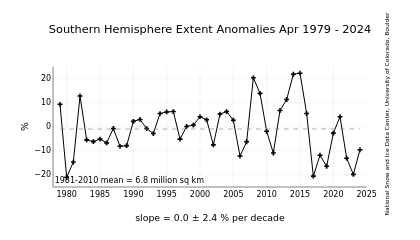
We all have heard many times that summer sea ice minimums have declined in the northern hemisphere over the last 30 years. As mentioned above, this causes more sunlight to reach the dark ocean water, and results in a warming of the water. What is not so widely discussed is that southern hemisphere sea ice has been increasing, causing a net cooling effect. This article explains why the cooling effect of excess Antarctic ice is significantly greater than the warming effect of missing Arctic ice.
Over the last 30 years Antarctic sea ice has been steadily increasing, as shown below.

http://nsidc.org/data/seaice_index/images/s_plot.png

December is the month when the Antarctic sun is highest in the sky, and when the most sunlight reaches the surface. Thus an excess of ice in December has the maximum impact on the southern hemisphere’s radiative balance. In the Antarctic, the most important months are mid-October through mid-February, because those are months when the sun is closest to the zenith. The rest of the year there is almost no shortwave radiation to reflect, so the excess ice has little effect on the shortwave radiative (SW) balance.

This has been discussed in detail by Roger Pielke Sr. and others in several papers.
http://www.climatesci.org/publications/pdf/R-222.pdf
http://www.climatesci.org/publications/pdf/R-256.pdf

So how does this work? Below are the details of this article’s thesis.

1. As mentioned above, the Antarctic ice excess occurs near the December solstice when the sun is highest above the horizon. By contrast, the Arctic ice deficiency appears near the equinox - when the sun is low above the horizon. Note in the graph below, that Arctic ice reaches it’s minimum in mid-September - just when the sun is setting for the winter at the North Pole. While the September, 2008 ice minimum maps were dramatic, what they did not show is that there was little sunlight reaching the water that time of year. The deviation from normal did not begin in earnest until mid-August, so there were only a couple of weeks where the northern hemisphere SW radiative balance was significantly impacted. Thus the water in most of the ice-deficient areas did not warm significantly, allowing for the fast freeze-up we saw during the autumn.
The 2008 peak Arctic ice anomaly occurred near the equinox, when it had the minimum heating effect on the ocean.
http://www.ijis.iarc.uaf.edu/seaice/extent/AMSRE_Sea_Ice_Extent.png
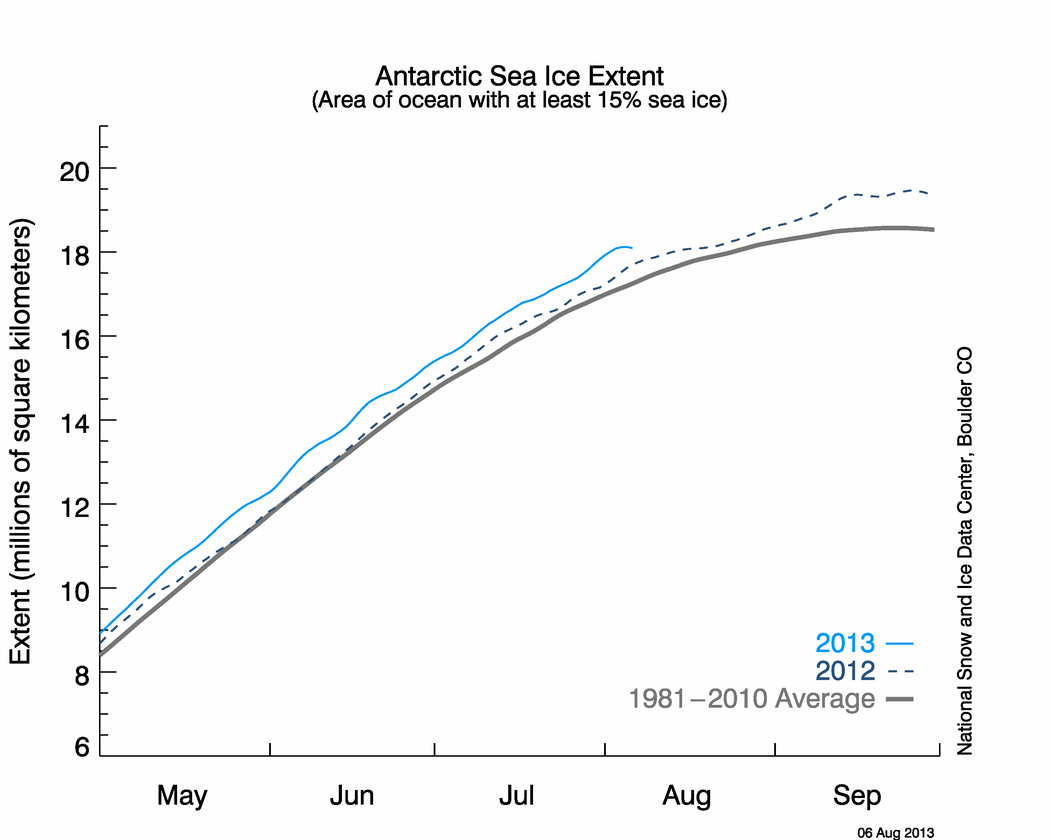
By contrast, the peak Antarctic ice anomaly occurred at the December solstice, when it had a maximum cooling effect, as shown below.
http://nsidc.org/data/seaice_index/images/daily_images/S_timeseries.png
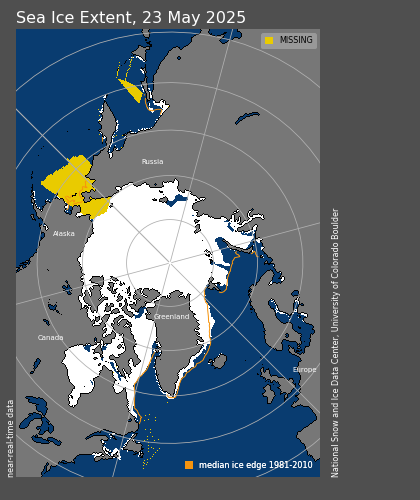
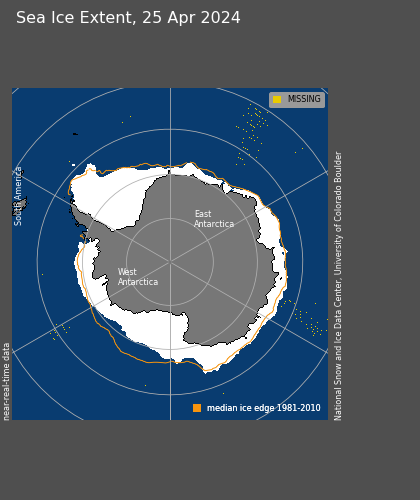
2. The next factor to consider is the latitude of the ice, which has a strong effect on the amount of solar insolation received. Arctic sea ice is closer to the pole than Antarctic sea ice. This is because of the geography of the two regions, and can be seen in the NSIDC images below.

http://nsidc.org/data/seaice_index/images/daily_images/N_daily_extent.png
http://nsidc.org/data/seaice_index/images/daily_images/S_daily_extent.png

Antarctic sea ice forms at latitudes of about 55-75 degrees, whereas most Arctic ice forms closer to the pole at latitudes of 70-90 degrees. Because Antarctic ice is closer to the tropics than Arctic ice, and the sun there reaches a higher angle above the horizon, Antarctic sea ice receives significantly more solar radiation in summer than Arctic sea ice does in its’ summer. Thus the presence or absence of Antarctic ice has a larger impact on the SW radiative balance than does the presence or absence of Arctic ice.

At a latitude of -65 degrees, the sun is about 40 degrees below the zenith on the day of the solstice. Compare that to early September negative anomaly peak in the Arctic at a latitude of 80 degrees, when the sun is more than 70 degrees below the zenith. The amount of solar radiation hitting the ice surface at those maxima is approximately 2.2 times greater in the the Antarctic than it is in the Arctic = cos(70) / cos(40) .

The point being again, that due to the latitude and date, areas of excess Antarctic ice reflect a lot of SW radiation back out into space, whereas deficient Arctic ice areas allow a much smaller quantity of SW radiation to reach the dark surface of water. Furthermore, in September the angle of incidence of the sun above the water is below the critical angle, so little sunlight penetrates the surface, further compounding the effect. Thus the Antarctic positive anomaly has a significantly larger effect on the earth’s SW balance than does the Arctic negative anomaly.

3. The next point is an extension of 2. By definition, excess ice is further from the pole than missing ice. Thus a 10% positive anomaly has more impact on the earth’s SW balance than does a 10% negative anomaly.

4. Due to eccentricity of the earth’s orbit, the earth is 3% closer to the sun near the December solstice, than it is during the June solstice. This further compounds the importance of Antarctic ice excess relative to Arctic ice deficiency.

All of these points work together to support the idea that so far, polar ice albedo feedback has been opposite of what the models have predicted. To date, the effect of polar albedo change has most likely been negative, whereas all the models predicted it to be positive. There appears to be a tendency in the climate community to discount the importance of the Antarctic sea ice increase, and this may not be appropriate.

thanks to wattsupwiththat

Wednesday, January 7, 2009

Tossing iron powder into ocean to fight global warming

NEW DELHI: Can tossing tonnes of iron powder into the ocean help the world fight global warming? A team of Indian scientists, along with their counterparts from Germany and elsewhere, is embarking on an ambitious 70-day ocean expedition on Wednesday to find answers to that question.

Twenty-nine scientists from India, eleven from Germany and ten others will board German research vessel, Polarstern, in Cape Town and head to the experiment site in southwest Atlantic near Antartica. They will stay in the cold and notoriously stormy waters for nearly two months to test a controversial hypothesis that, experts say, has the potential to clean up as much as 1 billion tonne (1 Gt) of CO2 from the atmosphere every year and store it below the ocean for centuries.

CO2 is a greenhouse gas chiefly responsible for global warming. According to current estimates, world emits 7 Gt of carbon into the air every year.

"We hope to have a deeper understanding of the technique than previous researches,'' S W A Naqvi of National Institute of Oceanography, who is the chief Indian scientist for the expedition, told TOI on email from Cape Town.

The experiment, called LOHAFEX loha for iron and FEX for fertilization experiment will test the efficacy of a technique that could not only become the most important way to dispose of CO2, but which also has millions riding on it by way of carbon credits. At least two US companies hope to profit from ‘ocean iron fertilization’ (OIF), as the method is called, by selling credits.

During the $2 million experiment, scientists will throw 20 tonnes of dissolved iron sulphate in 300 sq km of ocean. The iron is expected to stimulate a rapid blooming of phytoplankton, a microscopic algae that grows on the ocean surface.

Like all plants, phytoplankton takes up CO2 from air and converts it to carbon compounds like carbohydrates. The plant quickly dies and starts sinking, taking the carbon with it. What happens thereafter is the key to the technique's efficacy: If it sinks well below the ocean surface, the carbon would effectively have been put away for a long period.

The nutrient-rich but iron-deficient southern ocean is seen as an ideal site for OIF. The area is spread across 50 million sq km 15 times the size of India. The math done by scientists show that if the entire southern ocean were fertilized by iron and a sizeable fraction of the phytoplankton sank well below 1,000m, then about 1 Gt of carbon would be isolated for centuries. Water at depths below 500m takes about 100 years to come to the surface.

The scientists say the carbon footprint - additional carbon emitted by the technique - would be minor as compared with the gains.

For seven weeks, LOHAFEX's team of physicists, chemists, biologists and geochemists will study the effects of the algal bloom on the exchange of CO2 between ocean and atmosphere as well as on the oceanic food chain and the organisms of the underlying sea floor.

As Prof Naqvi put it, "The core issue the fate of organic matter produced due to iron fertilization is still not settled. It is not clear whether this material gets recycled in the near-surface layer (which would make OIF not very useful) or a substantial fraction of it gets transported to the deep sea (which will make OIF a useful technique to isolate CO2). LOHAFEX is better equipped to track the fate of this carbon than previous researches.''

The researchers will also study krill, a shrimp-like animal which feeds on phytoplankton and is the main food of Antarctic penguins, seals and whales. Krill stocks have declined by over 80% in past decades and their response to the iron-fertilized bloom could give clues to help in recovery of the decimated great whale populations as well.

"India hasn't carried out such an experiment in the ocean so far. It requires a high level of expertise not found elsewhere in the Third World. So, apart from the scientific gains, the experiment itself should enhance our prestige. Significantly, more than half the Indian participants are students (from NIO),'' Naqvi said.

But OIF remains controversial, with many environmentalists saying it amounts to major tinkering with the marine eco-system. If done on the scales proposed in the future, it could have unforeseen consequences, they warn.

EU leaders agree on climate change deal

BRUSSELS, Belgium -- European leaders agreed Friday to stick to an ambitious plan to fight global warming through emissions cuts and renewable energy, and on ways to share the hefty costs of setting a global example.

The plan includes concessions to heavy industry and countries in Eastern Europe worried that the cost of curbing pollution would impede economic growth. The expense of the plan had caused uproar among many countries as the continent grapples with economic downturn.

The plan, agreed at an EU summit, lays out how the 27 member countries will cut carbon emissions by 20 percent by 2020.

French President Nicolas Sarkozy, who holds the bloc's rotating leadership, called the agreement historic and urged global partners to follow Europe's example at U.N. climate change talks in Poznan, Poland.

The French president says the 27-nation bloc has "now delivered" and it was "now the time" for others, including the United States and China, to follow suit.

"People will not follow Europe unless we set the example," he said.

EU Commission President Jose Manuel Barroso called the plans "the most ambitious proposals anywhere in the world."

"Europe has passed its credibility test," he said.

An EU deal could breathe new life into the U.N. climate talks, which were expected to wrap up Friday with a work plan for talks over the next year on a new global warming treaty. But that plan needs worldwide support.

The eyes of Europe's economic rivals were on the EU talks to see how the bloc manages to balance economic growth while keeping intact promises to rein in emissions.

"The overall political message that we have sent to the rest of the world is that Europe is taking the lead," Danish Prime Minister Anders Fogh Rasmussen said at a news conference after the talks, confirming that the leaders agreed on the climate package.

European diplomats haggled through the night on complex plans to fulfill promises made last year to meet so-called 20-20-20 targets: reducing greenhouse emissions by 20 percent and ensuring that 20 percent of energy comes from wind, sun and other renewable sources by 2020.

Desperate to get a deal, France backed several opt-outs to the strict reductions it wants industries to make. The opt-outs are aimed at heavy industry that might flee abroad to regions with looser environmental rules.

France also proposed leeway for countries very dependent on coal and oil for power generation -- but the EU plan that this must be temporary.

The leaders also agreed on a euro200 billion ($258 billion) Europe-wide economic stimulus package to ease the effects of a recession. The downturn overshadowed talks on the costly climate deal.

Sunday, January 4, 2009

Amazing discovery of green algae which could save the world from global warming

Melting icebergs, so long the iconic image of global warming, are triggering a natural process that could delay or even end climate change, British scientists have found.

A team working on board the Royal Navy’s HMS Endurance off the coast of Antarctica have discovered tiny particles of iron are released into the sea as the ice melts.

The iron feeds algae, which blooms and sucks up damaging carbon dioxide (CO2), then sinks, locking away the harmful greenhouse gas for hundreds of years.

British scientists have discovered that green algae could bury CO2 omissions at the bottom of the ocean

The team think the process could hold the key to staving off globally rising temperatures.

Lead researcher Professor Rob Raiswell, from Leeds University, said: ‘The Earth itself seems to want to save us.’

As a result of the findings, a ground-breaking experiment will be held this month off the British island of South Georgia, 800 miles south east of the Falklands. It will see if the phenomenon could be harnessed to contain rising carbon emissions.

Researchers will use several tons of iron sulphate to create an artificial bloom of algae. The patch will be so large it will be visible from space.

Scientists already knew that releasing iron into the sea stimulates the growth of algae. But environmentalists had warned that to do so artificially might damage the planet’s fragile ecosystem.

Last year, the UN banned iron fertilisation in the Great Southern Ocean.

The team working on board HMS Endurance off the coast of Antartica have discovered tiny particles of iron are released into the sea as ice melts

However, the new findings show the mechanism has actually been operating naturally for millions of years within the isolated southern waters. And it has led to the researchers being granted permission by the UN to move ahead with the experiment.

The scientist who will lead the next stage of the study, Professor Victor Smetacek, said: ‘The gas is sure to be out of the Earth’s atmosphere for several hundred years.’

The aim is to discover whether artificially fertilising the area will create more algae in the Great Southern Ocean. That ocean is an untapped resource for soaking up CO2 because it doesn’t have much iron, unlike other seas.

It covers 20million square miles, and scientists say that if this could all be treated with iron, the resulting algae would remove three-and-a-half gigatons of carbon dioxide. This is equivalent to one eighth of all emissions annually created by burning fossil fuels such as oil, gas and coal.

It would also be equal to removing all carbon dioxide emitted from every power plant, chimney and car exhaust in the rapidly expanding industries of India and Japan.

However, the experts warn it is too early to say whether it will work.

The team from ice patrol ship HMS Endurance used sledgehammers to chip deep into the interior of a 33ft-long mass of polar ice from half-a-dozen house-sized icebergs that had blown ashore in Antarctica.

Once back in the UK, they used a special microscope to analyse the samples, which revealed what they had been looking for – tiny iron particles, only a few millionths of a millimetre wide, embedded deep within the ice. Until now, it was thought that the only source of iron in the Southern Ocean was wind blowing in metal compounds from the deserts of nearby continents like Australia. But the research has disproved this.

Lead researcher Prof Rob Raiswell thinks the process could hold the key to staving off globally rising temperatures

Prof Raiswell said: ‘These particles measure only a fraction of a millimetre, but they have great importance for the global climate.’

Rising global temperatures, particularly over the past 50 years, have increased the rate at which polar ice melts, causing sea levels to rise.

Ten of the warmest years on record have been since 1991, with experts predicting that 2009 could be the hottest year yet.

The climate-change effect is set to substantially increase over the coming decades, as developing industrial nations pump out more CO2. Temperatures along the Antarctic Peninsula alone have increased by 2.5C over the past 50 years.

But for every percentage point increase in the amount of ice that breaks off, Prof Raiswell calculates that a further 26million tons of CO2 is removed from the atmosphere.

Polar expert Professor Smetacek and a 49-strong German research team is due to set sail from Cape Town in the icebreaker Polarstern in the next few days to conduct their groundbreaking experiment.

Crucially, the scientists want to know how much algae will sink to the bottom of the ocean where the CO2 will be safely trapped.

Rob Raiswell a geochemist at the University of Leeds believes the project is controversial as they are unsure of the effects on the ecosystem

Algae that falls a couple of miles below the surface will remain there for hundreds of years; algae that remains only a few hundred metres from the surface releases carbon back into the atmosphere.

Dr Phil Williamson, scientific co-ordinator of the Surface Ocean Lower Atmosphere study, funded by the UK’s National Environment Research Council, called the research ‘exciting’.

‘We have images from satellites which show the ocean stays green for weeks afterwards but the
key will be whether it stays that way,’ said Dr Williamson.

Schemes to fertilise the seas with iron have in the past been driven by commercial interests. This is the biggest ever scientific attempt.

Last May, the UN Convention on Biological Diversity called a halt to fertilisation around the Antarctic until there was more detailed scientific data. But the British findings led to the go-ahead for Professor Smetacek’s team from the Alfred Wegener Institute for Polar and Marine Research in Bremerhaven, Germany.

Nonetheless, even Prof Raiswell has called the project ‘highly controversial’. He said: ‘Oceans aren’t isolated boxes and it would affect the surrounding areas as well.

‘We don’t know what effect that would have. The ecosystems are very complicated. If the iceberg iron is useful, then it will just buy us more time.

‘The Earth might have fightback mechanisms but we must still try to reduce our CO2 emissions.’

Prof Smetacek said the issue is too complex not to be explored by scientists. He warned: ‘Objections will be swept away when our powerlessness in the face of climate change becomes apparent.’

Soot reduction 'could help to stop global warming'

Cutting one of humanity's most common pollutants would have immediate cooling effect, Nasa claims

Governments could slow global warming dramatically, and buy time to avert disastrous climate change, by slashing emissions of one of humanity's most familiar pollutants – soot – according to Nasa scientists. A study by the space agency shows that cutting down on the pollutant, which has so far been largely ignored by climate scientists, can have an immediate cooling effect – and prevent hundreds of thousands of deaths from air pollution at the same time.

At the beginning of the make-or-break year in international attempts to negotiate a treaty to replace the Kyoto Protocol, the soot removal proposal – which is being taken seriously by experts close to the Obama administration – offers hope of a rapid new way of tackling global warming. Governments have long experience in acting against soot.

Cutting its emissions has a virtually instantaneous effect, because it rapidly falls out of the atmosphere, unlike carbon dioxide which remains there for over a hundred years. And because soot is one of the worst killers among all pollutants, radical reductions save lives and so should command popular and political support.

The study – from Nasa's Goddard Institute for Space Studies, and published in the journal Atmospheric Chemistry and Physics – concludes that tackling the pollution provides "substantial benefits for air quality while simultaneously contributing to climate change mitigation" and "may present a unique opportunity to engage parties and nations not yet fully committed to climate change mitigation for its own sake."

Black carbon, the component of soot that gives it its colour, is thought to be the second largest cause of global warming after carbon dioxide. Formed through incomplete combustion of fossil fuels, wood and vegetation, it delivers a double whammy.

While in the air, it is spread around the globe by the wind, and helps to heat the atmosphere by absorbing and releasing solar radiation. And when it falls out it darkens snow and ice, at the poles or high in mountains, reducing its ability to reflect sunlight. As a result it melts more quickly, and exposes more dark land or water which absorbs even more energy, and so increases warming.

The bad news – as the Washington-based Institute for Governance and Sustainable Development points out – is that soot is causing global warming to happen much faster than expected. Its president, Durwood Zaelke, says "black carbon is exacerbating the climate situation": "Taking quick action is quite simply our only near-term option."

Rich countries have already reduced their emissions of black carbon from burning fossil fuels dramatically since the 1950s. The health benefits of a worldwide cut could be massive. Soot contains up to 40 different cancer-causing chemicals and can also cause respiratory and heart diseases. It is estimated to cause two million deaths in the developing world each year – mainly among children – when emitted from wood-burning stoves in poorly ventilated houses. In Britain, research has shown that people are twice as likely to die from respiratory disease when heavily exposed to soot emitted from vehicle exhausts.

Tackling these two health crises, the Nasa study concludes, would also be the most effective short-term way of slowing climate change. Its research shows that the "strongest leverage" on reducing global warming would be achieved by "reducing emissions from domestic fuel burning" in developing countries, particularly in Asia, and by "reduction in surface transport emissions in North America", especially from diesel engines.

In both cases solutions are known. Cookers using solar energy or biogas, for example, eliminate smoke. And last month California brought in measures to force trucks to fit filters to reduce diesel soot emissions by 85 per cent, estimating that they would save 9,400 lives over the next 16 years.

Saturday, January 3, 2009

New California Cars Display Smog, Global Warming Scores

SACRAMENTO, California, January 2, 2009 (ENS) - As of January 1, every 2009 model year and newer car built for sale in California will be required to carry a label that clearly ranks the vehicle's environmental impact. A vehicle's certification level can be found under the hood on the vehicle emissions control information label.

The label will show a simple ranking system that provides consumers with practical information that can help them choose the most environmentally friendly vehicle that still meets their transportation needs.

"This label will arm consumers with the information they need to choose a vehicle that saves gas, reduces greenhouse gas emissions and helps fight smog all at once," said California Air Resources Board Chairman Mary Nichols. "Consumer choice is an especially powerful tool in our fight against climate change."

The environmental performance label will have two scores on a scale of 1-10, a global warming score and a smog score.

The higher the score the more environmentally friendly the car is. The average new car will score five on both scales.

Electric cars earn the highest ratings on both scores. One car rating 10 on both scores is the GEM electric car from Global Electric Motors, a Chrysler company. Priced at $12,495, the GEM is 100 percent battery-electric and does not use any gasoline.

A GEM electric car is the highest rated car for both the smog and the global warming scores.

Greenhouse gases trap heat in the atmosphere, creating global warming. Scientists are certain that human activities such as burning gasoline for transportation are changing the composition of the atmosphere and warming the planet's climate.

Greenhouse gases emitted from vehicles include carbon dioxide, CO2, methane, nitrous oxide, and hydroflurocarbons from air conditioner refrigerant. Greenhouse gas emissions are identified as the CO2-equivalent value.

The California global warming score is based on the sum of a vehicle's greenhouse gas emissions, which are identified as the CO2-equivalent value.

The global warming score ranks each vehicle's CO2-equivalent value on a scale of one to 10 relative to all other vehicles within the current model year.

A score of 10 is the cleanest a vehicle can rate and indicates that the vehicle emits less than 200 grams of CO2-equivalent per mile driven.

A score of one is the dirtiest a vehicle can rate and indicates that the vehicle emits more than 520 grams of CO2-equivalent per mile driven.

The global warming scores are adjusted to reflect the contribution of greenhouse gas emissions from the production and distribution of the fuel used to power the vehicle.

Smog is hazy air pollution produced by the photochemical reaction of sunlight with volatile organic compounds and oxides of nitrogen released into the atmosphere, especially by automobile operation.

California's new smog score ranks each vehicle's pollutant levels of non-methane organic gases and oxides of nitrogen relative to all other vehicles within the current model year.

Smog scores will be on a scale of one to 10, with 10 being the cleanest. The average vehicle available in California today will get a smog score of 5. Many pre-2004 vehicles fall below a smog score of one. This is because, over time, there have been significant advances in air pollution control technologies and the Air Resources Board has established more stringent pollution standards for vehicles.

Friday, December 5, 2008

Quarter of Species Gone by 2050


Using several models that project habitat changes, migration capabilities of various species, and related extinctions in 25 "hotspots," scientists predict that a quarter of the world's plant and vertebrate animal species would face extinction by 2050.


A report detailing the projections was released today.


Biodiversity hotspots are some of the richest and most threatened biological pools on Earth. They contain 44 percent of plant and 35 percent of the Earth's vertebrate species on only 1.4 percent of the Earth's land. Each hotspot contains its own set of unique species.


"Climate change is rapidly becoming the most serious threats to the planet's biodiversity," said Jay Malcolm, an assistant forestry professor at the University of Toronto. "This study provides even stronger scientific evidence that global warming will result in catastrophic species loss across the planet."


In the most dramatic of the scenarios, for which carbon dioxide levels grow to double that of today's levels, the models forecasted a potential loss of 56,000 plant species and 3,700 vertebrate species in the hotspots.


Such a climate scenario could become a reality in only 50 years, the study estimates.


"These species lose their last options if we allow climate change to continue unchecked," said Lara Hansen, chief climate scientist at the global conservation group World Wildlife Fund. "Keeping the natural wealth of this planet means we must avoid dangerous climate change—and that means we have got to reduce carbon dioxide emissions."


The study found that certain hotspots were especially sensitive to climate change with extinctions sometimes exceeding 2,000 plant species per hotspot. These include the Caribbean, the Tropical Andes, Cape Floristic region of South Africa, Southwest Australia, the Atlantic forests of Brazil, Paraguay, and Argentina.


The results are detailed in the journal Conservation Biology.

Tuesday, November 18, 2008

Cattle Burping Can Lead to Global Warming

Global Warming Effects, Global Warming Causes, Define Global Warming, Effects of Global Warming, Global Warming Prevention,


That cattle herd sitting in the middle of the road, contently chewing away as you honk, is not just traffic nuisance. Research has revealed that cattle belching is speeding up global warming as well!

Methane, which ruminating animals like cattle and sheep emit during their digestive cycle when they belch, and nitrous oxide (N2O) that is emitted from its manure, has 21 times and 310 times respectively greater potential of causing global warming than the carbon dioxide being emitted from your vehicle’s exhaust pipe.

According to a study by IIM-A, India’s livestock releases twice as much greenhouse gas than all vehicles in the country together. Last year, Gujarat had emitted 1.34 million tonnes of methane and 0.025 million tonnes of N2O into the atmosphere.

Sixty percent of CO2 equivalent (CO2e) emissions from Banaskantha, Sabarkantha and nearly half of Mehsana, Anand and Patan districts are in the form of methane primarily emanating from livestock. Methane also dominates emissions from Panchmahals, Dahod and Narmada.

Most of these districts due to predominant agrarian economic activities also have between 10 and 20 per cent emissions in the form of N2O from use of nitrogenous fertilizer. Typically a single cattle, cow or buffalo emits 0.70 ton CO2e methane emissions each year.

Currently, India has no binding emission reduction commitment under the Kyoto protocol. But in the long run GHG emissions will attract penalty everywhere. If that were the case today then going by the price of 25 Euros per ton of CO2 in the European Union Emission Trading System (EUETS), annual emission of each cow would cost Rs 1,100.

As per the life cycle cost, this emission charge would make a litre of cow milk more expensive by Rs 3.64 and buffalo milk by Rs 2.51. The consumers in developed countries who have ratified the Kyoto Protocol are paying this additional cost of emissions in animal products.

Livestock owners may not be penalised at present but they can get credit under the clean development mechanism (CDM) if they reduce these emissions. This can be profitable for the organised dairy sector.

Gujarat, with its 22 million livestock and substantial dairy industry, can take benefit of the emerging carbon finance instruments like CDM. Income from the CDM project can generate additional income for farmers as well and can reduce the price of animal products such as milk.

Globally livestock producers deploy different approaches to reduce emissions from livestock. Methane emissions per animal product are reduced by feeding concentrates instead of forage.

There are a range of dietary additives which reduce ‘methanogenesis’, production of methane in digestion. In the long run, emissions per animal product are reduced by breeding. Such technological and management innovations are feasible to qualify for emission reduction permitted under CDM.

High Environmental Hopes Riding on Obama's Green Promises

obama, Define Global Warming, Facts on Global Warming, Global Warming Prevention, Global Warming, Global Warming Controversy, global warming debate, Global Warming Effects, Obama

Congratulations to President-elect Barack Obama and his team with messages of hope and pledges of support rolled in today from environmental and sustainable business groups across the political spectrum.The Sierra Club said in a statement, "If the Obama administration is as smartly, deliberately, and thoughtfully run as his presidential campaign, our country and our future are in very capable hands."

Obama declared in his victory speech, "We cannot go back to the old way of doing things."

The groups agree and each organization - from the investors of the Ceres Group to the grassroots members of Defenders of Wildlife - has words of advice for Obama along with their congratulations and compliments.

Many groups are reminding Obama of his pledge to make clean energy his top priority, to reduce U.S. dependence on foreign oil, kickstart economic recovery, create millions of jobs, and curb climate change.

Fred Krupp, president of Environmental Defense said, "This election offers us the greatest opportunity we have ever had to change course on global warming."

"We must do everything we can to pass climate legislation here at home and to craft a global compact that unites the world against the common enemy of rising temperatures, melting ice caps, erratic weather and the spread of disease," said Krupp.


Mindy Lubber, president of Ceres, the largest coalition of investors, environmental and public interest organizations in North America, said members of her group want the Obama administration and Congress to curb global warming by passing legislation to reduce greenhouse gas emissions by 25 percent below 1990 by 2020, and 80 percent below the benchmark by 2050.

Ceres urges reform of the capital markets to require "honest accounting of financial risks that companies and investors face from climate change."

An Obama administration should end tax incentives and subsidies for high carbon-emitting technologies and projects and enact mandates that 20 percent of the nation’s electricity come from renewable power by 2020 and at least 30 percent by 2030, Lubber said.

"The new administration and Congress must shun the excuse that it is 'too expensive' to act to curb global warming, to treat our resources as limited, or to end our allegiance to high-carbon fuels," said Lubber. "It is too expensive not to act, and the cost of inaction in a future world of 9 billion people is what Barack Obama last night called "a planet in peril."

"It is a world in a headlong rush toward climate instability, water scarcity, high food prices, deeper global poverty, and locked in a perilous addiction to oil and coal," she said.

"The reward for action is a green and sustainable economy that creates new business opportunities, trains a legion of new workers, helps heal the environment and assures our future," Lubber said. "We believe investors, companies and those who work for them are just waiting for the signals from Washington to begin this work. Those signals should come quickly - in the first 12 months of the new administration."

With 750,000 members and activists, Environment America and its federation of state environment groups endorsed Obama for president and 29 candidates for Congress and lobbied swing voters on behalf of their candidates.

"This election pitted the energy policy of last 30 years against that of the next 30 years," said Anna Aurilio, director of Environment America's Washington, DC office. ""This is now a clean energy Congress - 65 percent of new House members and all of the new Senate members come from states with strong renewable electricity requirements."

"Senator McCain focused on the oil, coal and nukes of the past, while Senator Obama called for a new energy economy fueled by renewable energy such as wind and solar, investments in clean technologies of the future and five million new jobs. From Senator Obama on down the ballot, the candidates who won were talking about a clean energy future and voters understood that this was the key to a stronger economy, a more secure world and the solution to global warming," she said.

The Alliance to Save Energy today urged Obama to fulfill his campaign promise to make building a sustainable energy future for America a key priority upon taking office in January.

"The Obama-Biden 'New Energy for America' plan contains many exciting, creative, and urgently needed energy-efficiency actions," said Alliance President Kateri Callahan. "The Alliance stands ready to help our new president and his team deliver a new energy future for America that is built on a bedrock of energy efficiency."

The Apollo Alliance of environmental, labor and business organizations said, "President-elect Barack Obama’s priority list jives with Apollo’s clean energy, good job goals. Sweeping Democratic victories in yesterday’s elections are expected to bring good fortune to wind and solar interests and hope to all those interested in stabilizing the climate."

With his congratulations, Wildlife Conservation Society President and CEO Steven Sanderson said, "Our nation is positioned to be a world leader in saving wildlife and wild places across the globe, including policies to address climate change." He encourages the incoming administration and Congress to reduce greenhouse gas emissions, "including reducing rates of deforestation which may account for 20 percent of all global carbon emissions."

"Efforts such as these are good for both wildlife and humanity," said Sanderson, "which share a common future as creatures inhabiting the same planet."

The historic victories of President-elect Barack Obama and environmental champions in Congress create a new era of opportunity for environmental priorities, said Defenders of Wildlife president Rodger Schlickeisen.

"A new day is dawning in Congress and the White House. Environmental champions won major victories at the polls yesterday, and the prospects for environmental progress in 2009 look bright," he said, urging them to tackle global warming, safeguard endangered species and better protect wildlife on public lands.

"Let's be clear - we have a lot of work ahead of us. We've just had eight years of the most anti-environmental presidency America has ever seen," said Schlickeisen. "Reversing the damage done by the Bush administration will take years of hard work."

"Defenders of Wildlife looks forward to working with President Obama and our champions in Congress to reverse President Bush's assault on our environment and promote a green economy for the people and wildlife of America."

The Center for Biological Diversity looks forward to working with the Obama administration and the new Congress to take swift action to stem the extinction crisis, reverse the current course toward runaway global warming, and promote the cultural diversity that is the essential foundation of a fulfilling life for all peoples, plants, and animals," said Executive Director Kierán Suckling.

"Mass extinction, global warming, and erosion of diversity are the greatest threats humanity has ever faced," he said. "The time left to address them is growing short. In our 20 years advocating for wildlife, wilderness, and untamed culture, we've never before witnessed a presidential election with so much promise to actually solve these issues."

Eli Pariser, executive director of MoveOn.org Political Action, "Our members sense the opportunity to achieve things that seemed improbable if not impossible only a year ago. For our members, this is the culmination of a decade of work to build a progressive, people-driven politics in America."

After endorsing President-elect Obama in February, MoveOn's 4.5 million members contributed more than $88 million towards Obama's presidential campaign, the organization announced today. More than one million MoveOn members worked in a coordinated field effort with the Obama campaign.

"President Obama will face daunting challenges from the day he takes office," said Pariser. "We look forward, however, to being part of the enormous wave of civic and political engagement that his Presidency has inspired and that will enable him to achieve the things that have been on the top of his agenda and ours. We look forward to the change all of us worked so hard to create."

California Economy Loses $28 Billion Yearly due to Health Effects of Pollution

Air Pollution, Cause of Global Warming, Health

The California economy loses about $28 billion annually due to premature deaths and illnesses linked to ozone and particulates spewed from hundreds of locations in the South Coast and San Joaquin air basins, according to findings released Wednesday by a Cal State Fullerton research team.Most of those costs, about $25 billion, are connected to roughly 3,000 smog-related deaths each year, but additional factors include work and school absences, emergency room visits, and asthma attacks and other respiratory illnesses, said team leader Jane Hall, a professor of economics and co-director of the university's Institute for Economics and Environment Studies.

The study underscores the economic benefits of meeting federal air quality standards at a time when lawmakers and regulators are struggling with California's commitment to protecting public health in a weak economy.

The $90,000 study does not propose any particular action. But in an interview, Hall said, "We are going to pay for it one way or the other. Either we pay to fix the problem or we pay in loss of life and poor health. . . . This study adds another piece to the puzzle as the public and policy-makers try to understand where do we go from here."

The California Air Resources Board is scheduled to vote Dec. 11 on whether to adopt broader rules that would force more than 1 million heavy-duty diesel truckers to install filters or upgrade their engines. Truckers and agribusiness have argued against stricter regulation, saying it is too expensive for them to invest in clean vehicles at a time of economic uncertainty.

Mary Nichols, chairman of the air resources board, said the findings will "be useful to all of us. Our board members hear on a regular basis from constituents who are concerned about the costs of regulations, and seldom hear from people concerned about their health because they are collectively and individually not as well organized."

In the meantime, the two regions continue to pay a steep price for generating air pollution ranked among the worst in the country. In the South Coast basin, that cost is about $1,250 per person per year, which translates into a total of about $22 billion in savings if emissions came into compliance with federal standards, Hall said. In the San Joaquin air basin, the cost is about $1,600 per person per year, or about $6 billion in savings if the standards were met.

The savings would come from about 3,800 fewer premature deaths among those age 30 and older; 1.2 million fewer days of school absences; 2 million fewer days of respiratory problems in children; 467,000 fewer lost days of work and 2,700 fewer hospital admissions, according to the study.

The study noted that attaining the federal standard for exposure to particulates would save more lives than lowering the number of motor vehicle fatalities to zero in most of the regions examined.

The hardest hit were fast-growing communities in Kern and Fresno counties, where 100% of the population was exposed to particulate concentrations above the average federal standard from 2005 to 2007. High rates of exposure were also found in San Bernardino and Riverside counties, where diesel soot is blown by prevailing winds and then trapped by four mountain ranges.

Considered the most lethal form of air pollution, microscopic particulates expelled from tailpipes, factory smoke stacks, diesel trucks and equipment can penetrate through the lungs and enter the bloodstream. Exposure to these fine particles has been linked to severe asthma, cancer and premature deaths from heart and lung disease.

"In the South Coast basin, an average 64% of the population is exposed to health-endangering annual averages of particulates," Hall said, "and in the most populated county -- Los Angeles -- it is 75%.

"In most years, the South Coast and San Joaquin basins vie with the Houston, Texas, area for the worst air pollution trophy, but this year we took it back," she said. "That's not a prize you want to be handed. Essentially, imported T-shirts and tennis shoes are being hauled to Omaha and the big-rig diesel pollution stays here."

Nidia Bautista, community engagement director for the Coalition for Clean Air, described the findings as "staggering, and a reminder that health is too often the trade-off when it comes to cleaning the air."

Angelo Logan, spokesman for the East Yard Communities for Environmental Justice, put it another way: "At a time when government is handing out economic stimulus packages, we could use an economic relief package to help us deal with environmental impacts on our health, families and pocket books."

Hall agreed. "This is a drain that could be spent in far better ways," she said.

sponsored links


Dewa Project Dewa Project Dewa Project